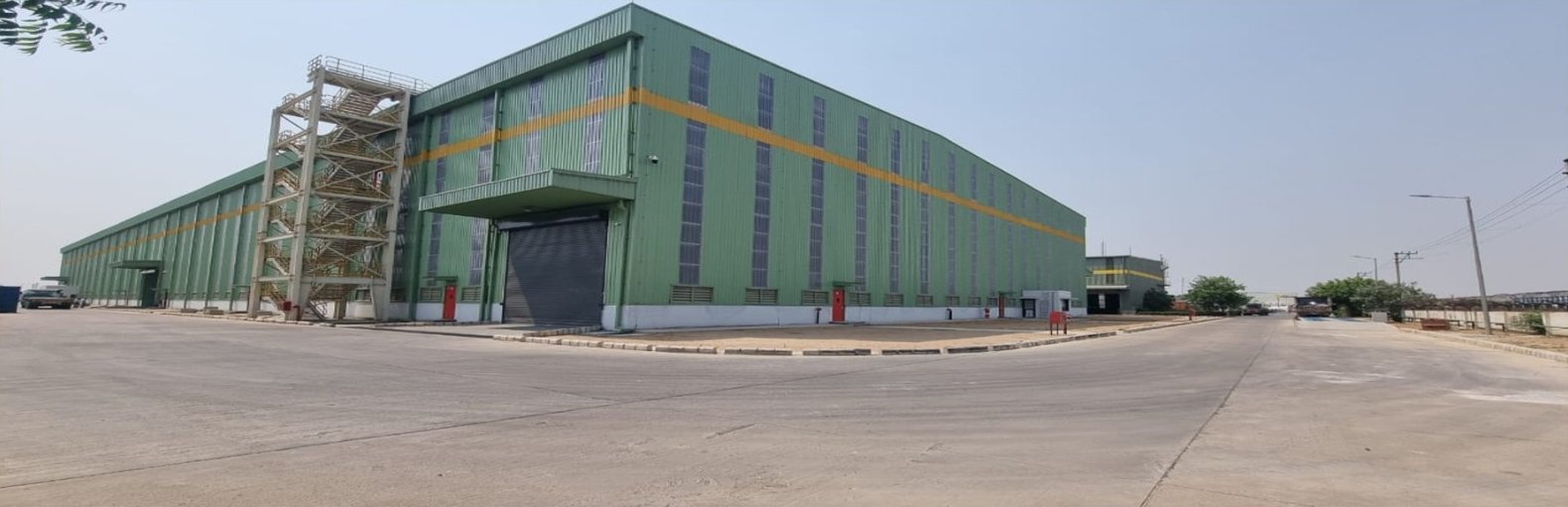

On paper, splitting a project into separate civil, MEP, façade and flooring packages looks cheaper — every package goes to the lowest bidder. On site, the savings often disappear into the gaps between those packages, and the owner is left managing them.
This article looks at where those gaps come from, what they really cost, and when a single-point turnkey contractor is the better way to deliver an industrial or commercial project.
Where the multi-agency model breaks down
Every construction package depends on others. Problems appear at the interfaces — the points where one contractor's work meets another's:
- Civil and MEP: sleeves, cut-outs and embedded conduits missed in the slab, discovered only when services are installed.
- Structure and façade: brackets and embeds that don't match the façade design, leading to site modifications.
- Flooring and MEP: trenches and floor drains planned after the slab is poured, cutting into a finished floor.
- Programme clashes: two teams needing the same area, crane or access route at the same time.
Each issue is small on its own. Together they create a chain of waiting, rework and argument about who is responsible.
The hidden costs of coordination gaps
- Idle time. Crews wait for another agency to finish before they can start.
- Rework. Finished work is broken out to fix an interface that was never coordinated.
- Variation claims. Every gap becomes a claim, and every claim becomes a negotiation.
- Owner's management load. Your team becomes the coordinator — chairing meetings, resolving disputes and chasing drawings.
- Unclear defect responsibility. After handover, a leak or crack can sit between two warranties, with each agency pointing at the other.
Most construction delays are not caused by any one contractor doing poor work. They are caused by nobody owning the space between contractors.
— PTPL Engineering Team
Multiple agencies vs. a single turnkey contractor
| Factor | Multiple agencies | Single turnkey contractor |
|---|---|---|
| Accountability | Split across packages | One point of responsibility |
| Interface risk | Carried by the owner | Carried by the contractor |
| Programme | Several schedules to align | One integrated programme |
| Cost certainty | Exposed to interface claims | Fewer variations |
| Owner's effort | High — owner coordinates | Lower — owner supervises |
| Defects after handover | Several warranties to chase | One warranty, one contact |
| Specialist control | Owner picks each specialist | Contractor selects and manages specialists |
When multiple packages still make sense
A single contractor is not always the answer. Separate packages can work well when the owner has a strong in-house projects team or an experienced project management consultant, when specialised process equipment must be procured directly, or on very large programmes split into clear, independent zones. The key is that someone with real authority owns the interfaces.
How to set up a turnkey contract well
- A clear scope and bill of quantities, with exclusions written down
- A design-responsibility matrix: who designs what, and who approves
- Milestone-based payments linked to measurable progress
- A documented quality plan and inspection schedule
- A site safety plan with named supervisors
- A simple, fast change-control process for genuine scope changes
Ask every bidder: "Show us your integrated programme with civil, MEP, façade and flooring on one chart." How they answer tells you whether interfaces are truly being managed.
How PTPL delivers turnkey projects
PTPL takes single-point responsibility for civil, structural, PEB, MEP, façade, flooring and finishing works, with in-house teams coordinating every interface under one programme. Recent turnkey deliveries include Beumer Group's facility at MET City, Jhajjar (complete turnkey excluding PEB, 11 months), Ashok Leyland's Lucknow plant (complete turnkey, 12 months) and Mapei's facility in Mathura (complete turnkey including PEB, 6 months). Our processes are certified to ISO 9001, ISO 14001 and ISO 45001.